
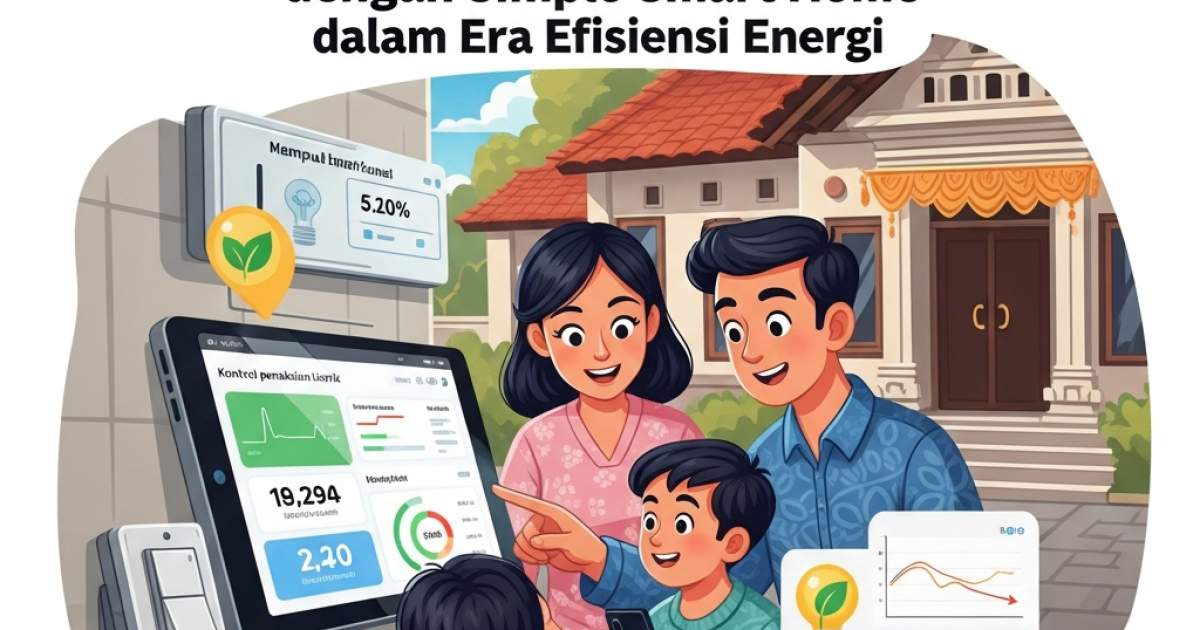
Amidst global energy price volatility and increasing awareness of climate change, energy efficiency has become an imperative, no longer just an option. Society and businesses are increasingly realizing the importance of wisely managing electricity consumption. In this context, smart home technology emerges as a potential solution, offering the ability to `control electricity usage with Simplo Smart Home` which is claimed to be able to change the way we interact with energy. This article will review Simplo Smart Home and similar systems from a critical technology journalist's perspective, highlighting their implications in modern energy management.
Overview & Urgency of Energy Efficiency in the Digital Era
The development of Internet of Things (IoT) technology has paved the way for the creation of smart homes and buildings. The concept of an `Electrical Management System` (EMS) is no longer the exclusive domain of large industries but is expanding into residential and small commercial scales. The urgency of energy efficiency is further reinforced by global reports showing an increase in per capita energy consumption and the urgency of decarbonization. According to various industry studies, households account for a significant portion of total electricity consumption, making them a primary target for energy-saving innovations. Poor management not only creates a financial burden but also accelerates environmental impact.
Smart Electrical Management System Technology and the Role of Simplo Smart Home
Smart electricity management systems are designed to monitor, analyze, and optimize energy usage in real-time. Common features include per-device power consumption monitoring, automation scheduling, and anomaly detection. `Simplo Smart Home`, as one of the players in this segment, offers capabilities to facilitate `electricity usage control with Simplo Smart Home` through its device ecosystem. Such systems typically allow users to set power limits, remotely turn off devices, and receive daily or monthly consumption reports. This approach offers a comprehensive guide for users to understand their consumption patterns and make more informed decisions. For example, Simplo, also known asdigital building management platform, demonstrating how integrated solutions can be applied not only in homes but also on a larger building scale.
Challenges, Implications, and Prospects of Future Electricity Consumption Control
Despite its promise, the implementation of an Electrical Management System in households also faces challenges. Adopting new technology requires initial investment and a learning curve for users. Data privacy and cybersecurity are crucial considerations, given that this system manages critical household infrastructure. Future implications suggest that electricity consumption control systems like Simplo Smart Home will continue to evolve. Integration with renewable energy sources, artificial intelligence for more accurate consumption prediction, and interoperability with other smart home standards will be development focuses. The prospect is the creation of a more adaptive, responsive, and sustainable energy ecosystem, where every individual has greater control over their energy footprint. Ultimately, the ability to manage and optimize electricity consumption through solutions like Simplo Smart Home represents a significant step forward toward a more efficient and sustainable energy future. However, long-term success will heavily depend on continuous innovation, strict security standards, and comprehensive user education.
Smart Updates in a World That's Too Fast with Nuupdate.com


Diskusi & Komentar
Bagikan insight kamu, ajukan pertanyaan, dan bantu pembaca lain memahami topik ini dari sudut pandang yang berbeda.